
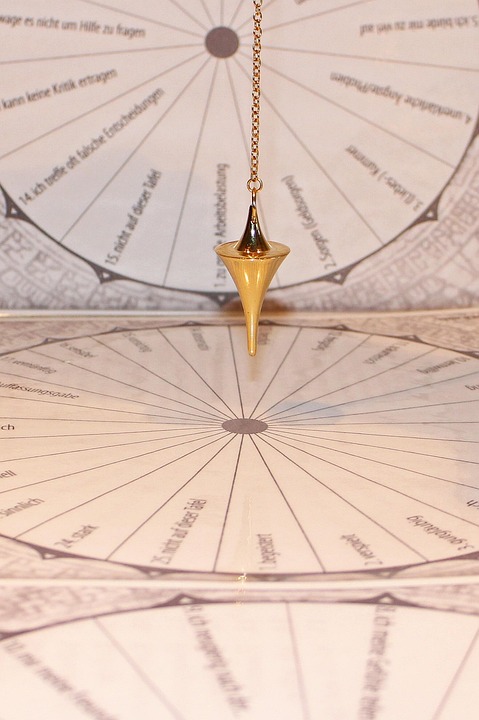
Pendulum dowsing, also known as radiesthesia, is an ancient practice that has been used for centuries to locate hidden objects, detect subtle energies, and gain insight into the unknown. This mysterious art has been shrouded in mystery and controversy, with many people questioning its validity and effectiveness. In this article, we will delve into the world of pendulum dowsing, exploring its history, principles, and applications, and separating fact from fiction.
A Brief History of Pendulum Dowsing
Pendulum dowsing has its roots in ancient cultures, with evidence of its use dating back to the Egyptian, Chinese, and Greek civilizations. The practice was initially used to locate underground water sources, minerals, and other hidden objects. Over time, pendulum dowsing evolved to include a range of applications, from spiritual and intuitive practices to scientific and practical uses.
How Pendulum Dowsing Works
The basic principle of pendulum dowsing involves using a weighted object, typically a pendulum, to detect subtle changes in energy or vibrations. The pendulum is suspended from a fixed point, and the user asks a series of questions, observing the pendulum’s movements to gain insight into the answer. The pendulum’s movements are believed to be influenced by the user’s subconscious mind, as well as external energies and vibrations.
Types of Pendulum Dowsing
- Intuitive Dowsing: This type of dowsing relies on the user’s intuition and subconscious mind to guide the pendulum’s movements.
- Technical Dowsing: This approach uses a more scientific and systematic method, often involving the use of charts, maps, and other tools to analyze the pendulum’s movements.
- Spiritual Dowsing: This type of dowsing is used to connect with spiritual energies, guides, and other non-physical entities.
Separating Fact from Fiction
While pendulum dowsing has been used for centuries, its effectiveness and validity have been the subject of much debate. Some people claim that pendulum dowsing is a pseudoscience, with no basis in reality, while others swear by its accuracy and usefulness. So, what does the evidence say?
Studies have shown that pendulum dowsing can be an effective tool for locating underground water sources and other hidden objects. However, the scientific community remains skeptical, citing a lack of empirical evidence and the potential for user bias and suggestion.
Common Criticisms of Pendulum Dowsing
- Lack of Empirical Evidence: Despite its long history, there is limited scientific research on the effectiveness of pendulum dowsing.
- User Bias and Suggestion: The pendulum’s movements can be influenced by the user’s expectations, biases, and suggestions, leading to inaccurate results.
- Placebo Effect: The perceived effectiveness of pendulum dowsing may be due to the placebo effect, where the user’s belief in the practice influences the outcome.
Conclusion
Pendulum dowsing is a complex and multifaceted practice that has been used for centuries to gain insight and locate hidden objects. While its effectiveness and validity are still debated, there is evidence to suggest that pendulum dowsing can be a useful tool in certain contexts. By understanding the principles and limitations of pendulum dowsing, and separating fact from fiction, we can approach this mysterious art with a critical and open-minded perspective.
Whether you are a seasoned practitioner or a curious newcomer, pendulum dowsing offers a fascinating glimpse into the world of subtle energies and vibrations. As we continue to explore and study this phenomenon, we may uncover new insights into the nature of reality and the human experience.
Leave a Reply